

Around 300 years ago, there lived a Shaolin nun named Ng Mui, a master of the “Weng Chun Bak Hok Pai” or “White Crane” Kung Fu style from the Weng Chun region in Fujian province. She, along with several other Shaolin monks, was persecuted by envoys of the Qing Dynasty rulers. Escaping from Fujian, the nun and her companions fled to southern China, settling near the borders of Yunnan and Sichuan provinces.
Ng Mui took refuge in the “Bak Hok Koon” or “White Crane Temple” in the Leung Mountains, where she later accepted a few select students. A passionate Kung Fu expert, she continuously sought to improve and refine the martial arts skills she had already mastered, even though she was already regarded as one of the best Kung Fu practitioners of her time.
While staying in this new region, Ng Mui observed that the local Kung Fu styles were more innovative and practical than traditional ones. She began reforming the old methods, integrating new techniques, and ultimately developed an entirely new combat system.
Ng Mui passed down all her knowledge to Yim Wing Tsun, her most advanced and beloved student. Yim Wing Tsun later married Leung Bok Chau, a salt merchant from Guangdong. She taught him everything she had learned from Ng Mui, and together, they dedicated themselves to refining and perfecting this martial art.
Leung Bok Chau later passed on his knowledge to the herbalist Leung Lan Kwai. Since the new system had no official name at the time, Leung Bok Chau decided to name it in honor of his wife, calling it Wing Tsun Kuen.
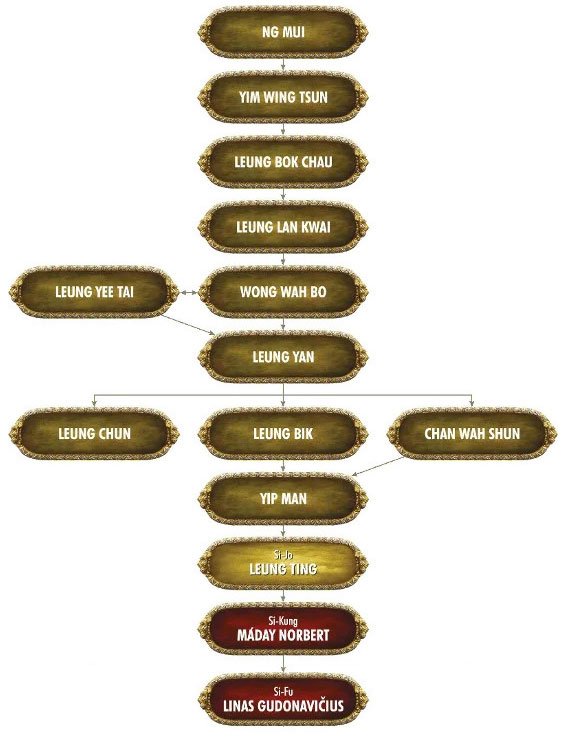
Leung Lan Kwai was very picky, so he took on two apprentices in his lifetime. One of them learned only a few fist techniques and the other, Wong Wah Bo, mastered his entire teaching. Wong Wah Bo was an opera actor. In those days, opera companies used to travel by river from one place to another to put on performances. All the actors, workers and the equipment needed for the performances travelled in a red painted junk, which was considered to be their symbol.
Many of the actors in the ‘red junk’ had mastered the martial arts required for their performances. Leung Yee Tai, a sailor, worked alongside Wong Wah Bo. Over time, Wong Wah Bo discovered that Leung Yee Tai was a real expert in long stick fighting. He was taught the long stick technique by the Buddhist monk Chi Sin, a disciple of Ng Mui, who had escaped with her from the Shaolin monastery. Chi Sin passed on the technique to Leung Yee Tai.
Wong Wah Bo and Leung Yee Tai recognised the advantages of each other’s techniques and decided to share their knowledge. Together they improved and modified the long stick technique and adapted it to the Wing Tsun system. This is how the Six and a Half Point staff technique came to Wing Tsun and how Leung Yee Tai became the successor of Wing Tsun.
The First Wing Tsun Visit to Denmark in June 1976
The history of Wing Tsun Kung Fu in Denmark dates back to 12 June 1976, when Grandmaster Leung Ting made his first visit to the country.
The journey began early in the morning. At 10:30 a.m., Mr. Lau accompanied Grandmaster Leung Ting to Cologne Airport, where they boarded a flight to Hamburg before continuing on to Copenhagen, Denmark.
They arrived at Copenhagen Airport at approximately 2:00 p.m., where they were welcomed by Ron Loving, an American living in Denmark who had invited Si-Fu Leung Ting to teach Wing Tsun, together with several of his friends.
Ron had arranged accommodation near the airport. Although the apartment was very modest—an old wooden building with two bedrooms, a small living room, and a shared bathroom on the upper floor—it provided everything needed for the visit. One of Ron’s companions also stayed with them. While the living conditions were far from luxurious, the hosts had done their best to organize everything within the limited time available.
After leaving their luggage, Ron took the visitors to see the martial arts training hall where the upcoming classes would be held. The training venue had originally been a ballet studio. It was a spacious hall located on a quiet street, with old wooden floors that creaked under every step. Ron explained that he rented the premises from the ballet school on an hourly basis, making it quite an expensive place to operate.
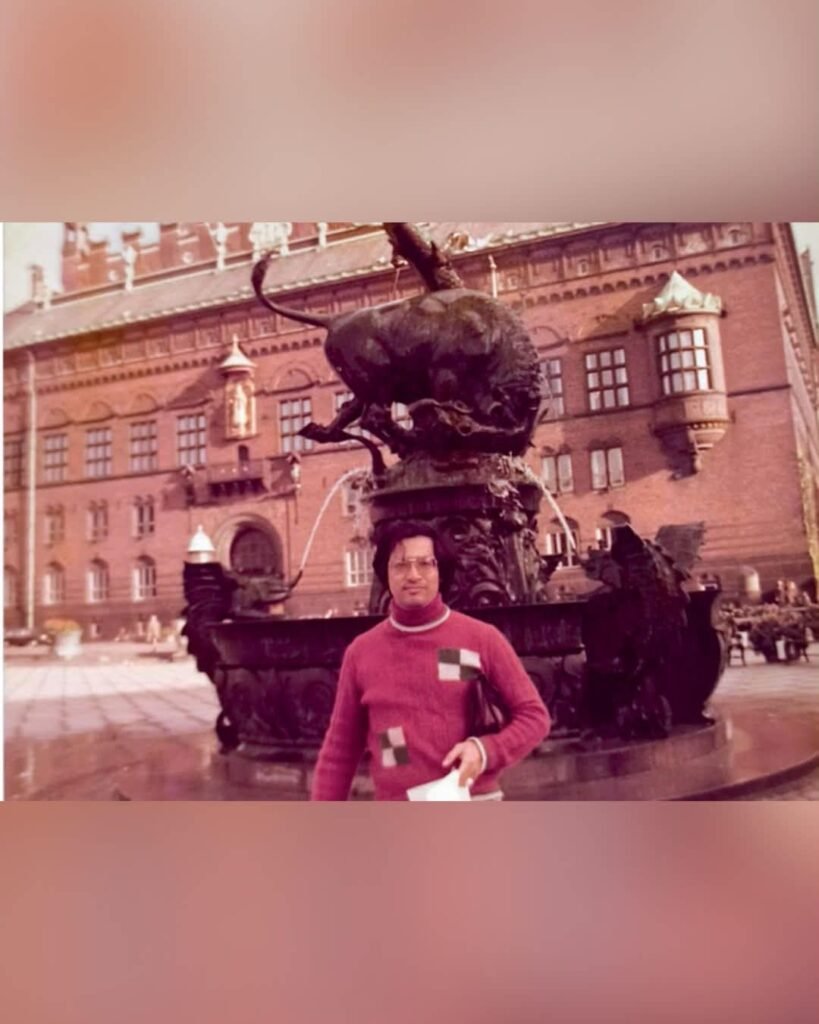
Later that day, the group visited a small local restaurant before taking a sightseeing tour around Copenhagen by bus, giving Grandmaster Leung Ting his first impressions of Denmark and its capital.
This historic visit marked the beginning of the Leung Ting Wing Tsun KungFu tradition in Denmark. Nearly fifty years later, that legacy continues as Wing Tsun is once again expanding across the Nordic countries under the guidance of Si-Kung Norbert Máday and Si-Fu Linas Gudonavičius, bringing authentic Leung Ting Wing Tsun KungFu to a new generation of practitioners.
In 2025, Si-Fu Linas Gudonavičius founded the Nordic Wing Tsun Association (NWTA) and serves as its President. The association is dedicated to developing and promoting authentic Leung Ting Wing Tsun Kung Fu across the Nordic countries, establishing new schools, educating instructors, and strengthening cooperation between the regional Wing Tsun communities.
Today, together with his teacher Si-Kung Norbert Máday, Si-Fu Linas Gudonavičius is leading the revival and expansion of Leung Ting Wing Tsun KungFu in the Nordic countries, building a strong foundation for the art’s continued growth in Northern Europe.
Student grading system
A Wing Tsun instructor, club leaders, and their abilities are defined by strict criteria. These standards are established to prevent fraudsters and impostors from damaging the good reputation of the International Wing Tsun Association (IWTA) and the martial art itself.
The Student Stage, comprising twelve Student Grades from the beginner to the graduate.
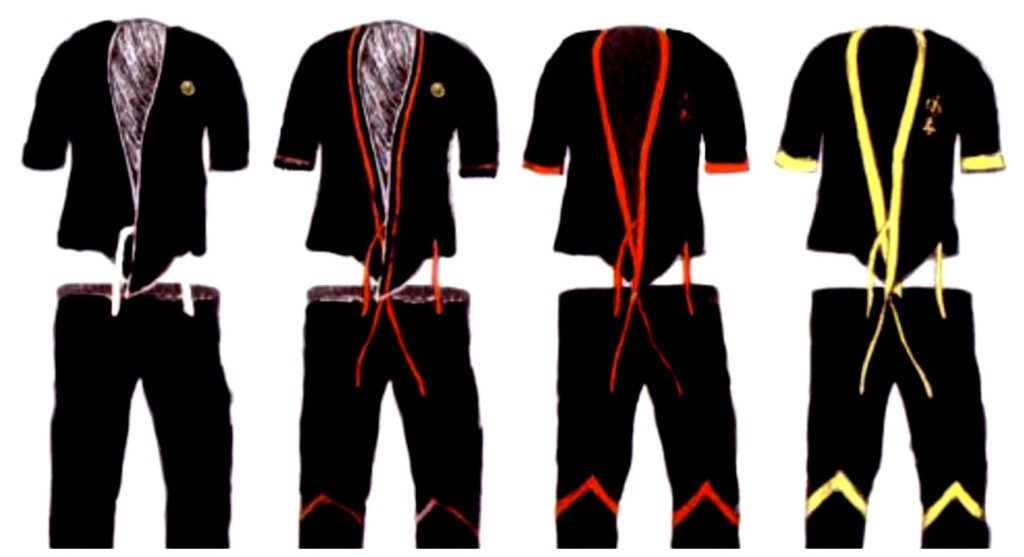
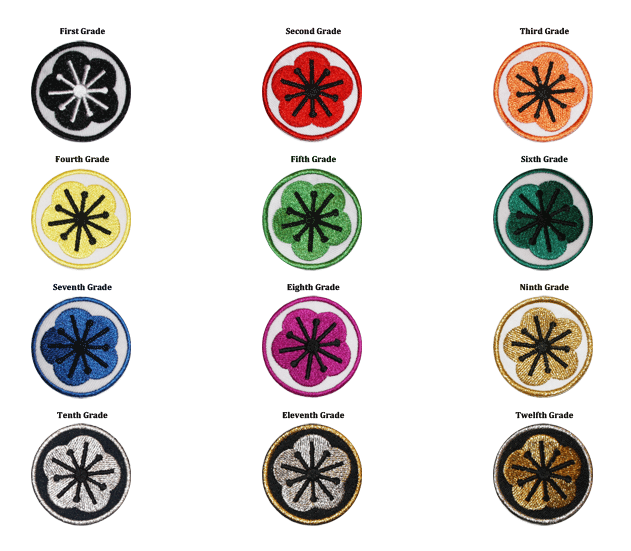
Each of the 12 Student Grades is represented by a colored plum-blossom patch/emblem.
A fighter who has completed the final student level becomes a master. Masters also have 12 levels, which are divided into three stages.
Mastery level system
Technical Stage
From the first to the fourth mastery level. Masters at this stage are taught fundamental techniques, which is why they are called technicians. Fighters who reach the technical stage already know Wing Tsun techniques and can apply them, though not yet with complete perfection.
Practical Stage
From the fifth to the eighth mastery level. Masters at this stage participate in standard practical and advanced combat training sessions. Wing Tsun fighters who achieve these levels are called practitioners. They skillfully apply WT techniques, and their strikes are extremely powerful. The higher the practitioner’s level, the more they understand about Wing Tsun. They also study the theories of other martial arts and, by comparing them, gain a deeper understanding of their own system.
Educational Stage
From the ninth to the twelfth mastery level. Individuals at this stage comprehend all theories of Wing Tsun and other martial arts. They possess a deep knowledge of the Wing Tsun system, enabling them to explain all theoretical aspects and analyze both the strengths and weaknesses of various theories. Masters at these levels must be able to integrate theories, logically and philosophically explaining not only Wing Tsun but also other martial arts.