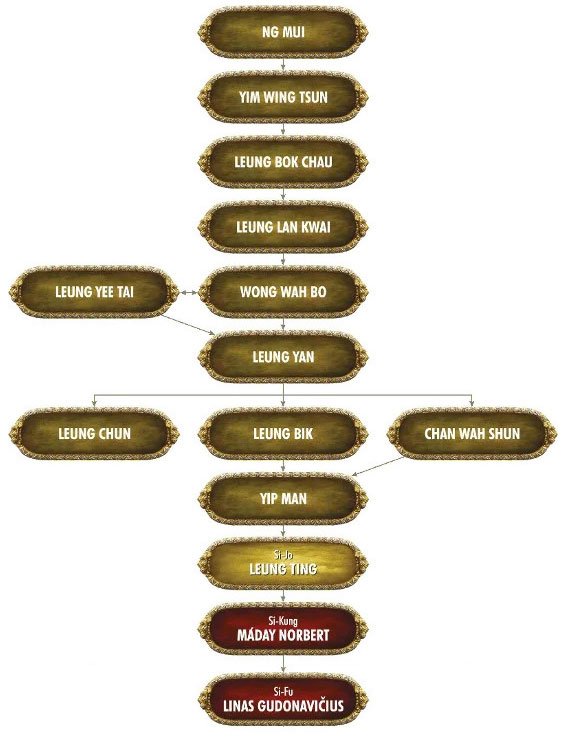
Around 300 years ago, there lived a Shaolin nun named Ng Mui, a master of the “Weng Chun Bak Hok Pai” or “White Crane” Kung Fu style from the Weng Chun region in Fujian province. She, along with several other Shaolin monks, was persecuted by envoys of the Qing Dynasty rulers. Escaping from Fujian, the nun and her companions fled to southern China, settling near the borders of Yunnan and Sichuan provinces.
Ng Mui took refuge in the “Bak Hok Koon” or “White Crane Temple” in the Leung Mountains, where she later accepted a few select students. A passionate Kung Fu expert, she continuously sought to improve and refine the martial arts skills she had already mastered, even though she was already regarded as one of the best Kung Fu practitioners of her time.
While staying in this new region, Ng Mui observed that the local Kung Fu styles were more innovative and practical than traditional ones. She began reforming the old methods, integrating new techniques, and ultimately developed an entirely new combat system.
Ng Mui passed down all her knowledge to Yim Wing Tsun, her most advanced and beloved student. Yim Wing Tsun later married Leung Bok Chau, a salt merchant from Guangdong. She taught him everything she had learned from Ng Mui, and together, they dedicated themselves to refining and perfecting this martial art.
Leung Bok Chau later passed on his knowledge to the herbalist Leung Lan Kwai. Since the new system had no official name at the time, Leung Bok Chau decided to name it in honor of his wife, calling it Wing Tsun Kuen.